


Quantum fluctuations, Casimir effect and Dirac's equation.
- Pedro

- Oct 8, 2019
- 6 min read
When the term "vacuum" is uttered an idea of "empty space" is immediately referred to the interlocutor's thinking. In ordinary studies, vacuum is simply considered to be the absence of matter, but, although common and consolidated, such meaning is not valid in the context of quantum mechanics.
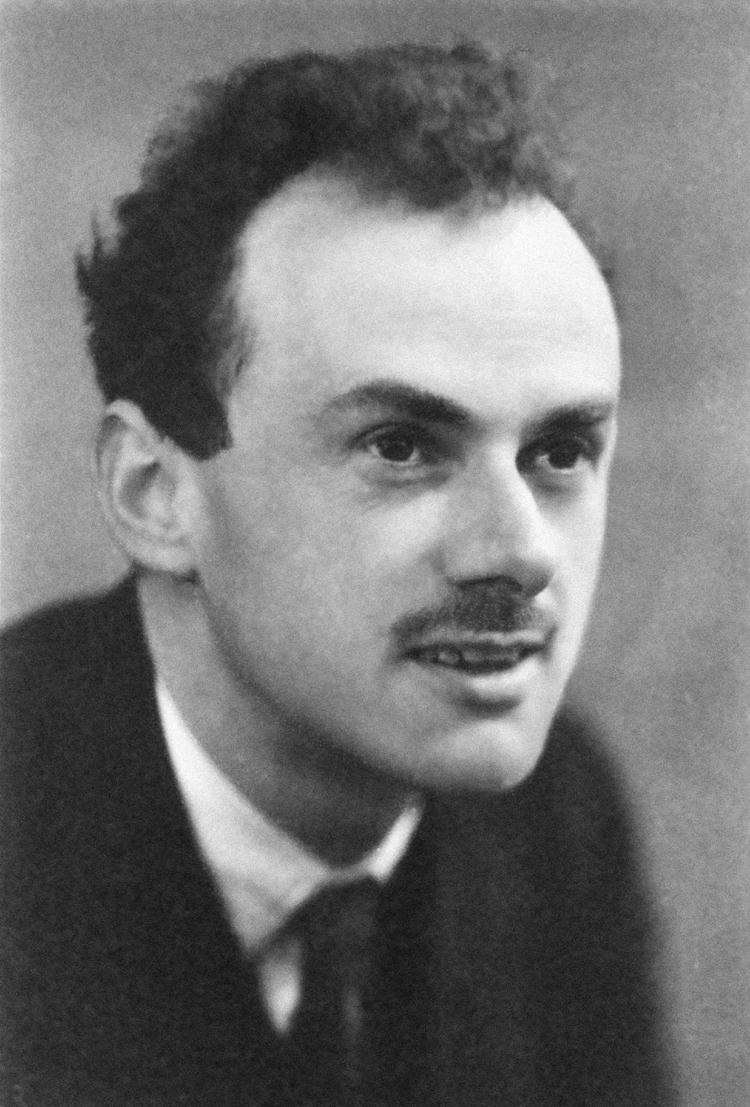
The relatively simple and elegant formulation of the description of quantum systems, published by Erwin Schrödinger in 1926, through the famous “Schrödinger equation” (equation I), is insufficient for the description of some cases such as particles moving at speeds close to light (~ 3X10 ^ 8 m / s). As published in Albert Einstein's works in 1905, special relativity offers an explanation of the effects experienced by matter as it approaches the speed of light. When a body exhibits such velocity, it is said to be under relativistic effects, so that time is dilated (as shown in equation II) and matter offers increasing resistance to acceleration as body velocity tends to increase. Schrödinger's equation did not contemplate relativistic effects, so a search was started for a way to unite special relativity with quantum mechanics. It was in 1928 that the brilliant Paul Dirac presented his equation (equation III), which united quantum physics with special relativity. His work also predicted the existence of anti-particles, 10 years before their detection.
In Dirac's formulation, the scientist first proposed what came to be called the “Dirac Sea”, a theoretical model which considers the vacuum as an infinite “sea” of particles with negative energy, preventing, through the principle of exclusion of Pauli (who notes that two fermions cannot occupy the same quantum state simultaneously) that real electrons do not continually lose energy in search of an "absolute ground state". The Dirac Sea emerged from Dirac's equation as an explanation of the negative energy quantum states predicted by the equation. In simple terms, the mechanism of the electron sea is the set of negative energy particles (called virtual particles) which, in the presence of a disturbance (such as the absorption of virtual photons), make it possible for the virtual electron to have positive energy, thus becoming temporarily a real particle. The “hole” left in the Dirac Sea by the “removal” of the negative energy particle is another particle, of the same mass as the electron, but of opposite electrical charge (+1.602 176 634 × 10⁻¹⁹ C) that being the “anti-particle” of the electron, called “positron”. This whole picture depicts a profound contradiction in one of the pillars of physics, the conservation of energy. A negative energy particle sporadically absorbs an amount of energy which makes it possible for the particles to pass into the “world” of the real particles. What is the origin of this energy? How to contemplate the principle of energy conservation? The answer came with Heisenberg's uncertainty principle.
Quantum mechanics has a strong basis in mathematical entities called “operators”, which are described based on linear algebra in the form of matrices. There are several types of operators, such as rotation, creation/destruction (widely used in quantum field theory), permutation, and Hermitian operators which describe observable physical amounts (such as the Hamiltonian, position, and momentum). More formally, an operator is an entity that acts on a physical state to provide eigenvalues of it (as shown broadly in equation IV using an arbitrary Hamiltonian). Operators can relate to each other so that there is a definition of a commutation relation between them. Such relation is denoted by [A, B] = AB-BA (where A and B are two arbitrary operators), if the result of that operation is 0, it is said that the operators “commute” with each other; if the result is other than 0, the operators do not commute and thus have a commutation rest C as follows: [A, B] = iC. In the most famous case, with the momentum and position operators, we have [x, p] = iℏ. In general, it is said that two observables are “incompatible” that is, they cannot be measured simultaneously, if the commutation relation between the operators returns a non-null value (ie when there is a commutation rest). Such theoretical formulation flourishes in the famous "Heisenberg uncertainty principle" whose fame lies in the relation between the uncertainties of momentum and position (as shown in equation V). However, the uncertainty principle is not restricted to observable quantities as exemplified, but also extends to the case of energy and time (they cannot be measured simultaneously). This implies the possibility that for short intervals of time it is possible to have spontaneous energy fluctuations in total vacuum, essentially out of nothing. In short, quantum mechanical conditions allow energy to be "created" briefly, however, over time, the total energy is conserved due to annihilation between the "created" particle and its respective antiparticle, "returning" the energy "borrowed". In other words, analogous to bank accounts (as illustrated by Stephen Hawking in “A Brief History of Time”), an individual can have a negative balance on some of his bank accounts, as long as the overall balance is positive.
Despite Paul Dirac's incredible successes, the Dirac Sea has some theoretical flaws and is no longer seen as a real physical description. The "dismantling" begins with the fact that in order to have an infinite negative electric charge density, filling the entire space, one must assume an "empty vacuum" whose electric charge density is positive and infinite, in order to cancel the appropriate counterparties. Since absolute density becomes immeasurable, the infinite density of electric charge does not describe a real physical description. Later, with the advent of quantum field theory (as will be explained here), a new interpretation was added to the issues raised by the Dirac equation. In the reformulation, the positron came to be regarded as a particle rather than merely as the absence of the electron.
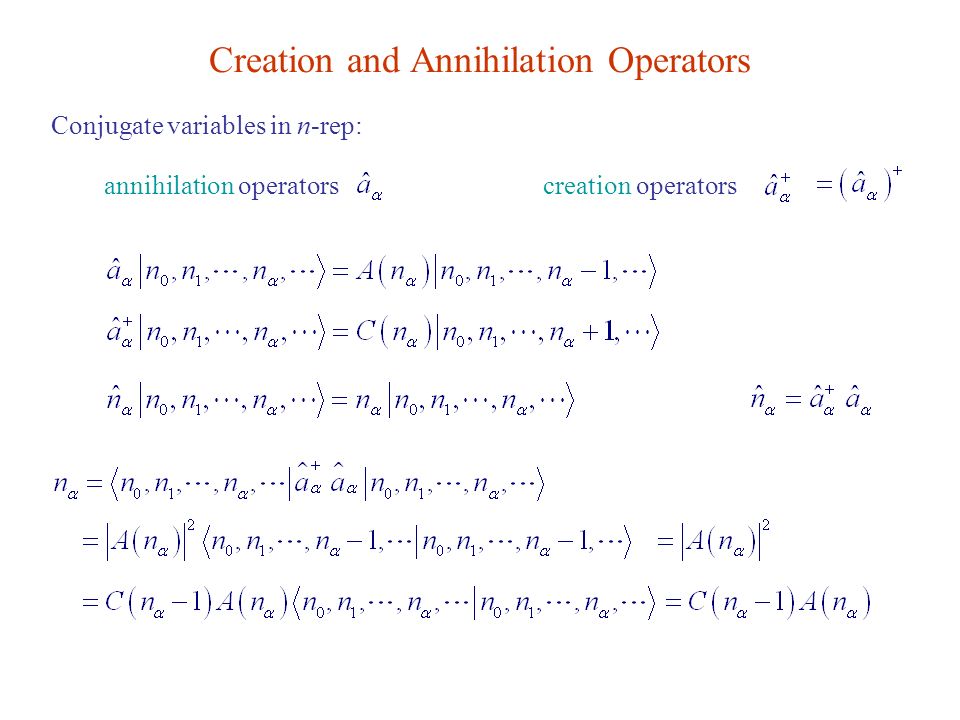
It is relevant to mention that Paul Dirac's primary formulation treated only fermions (semi-integer spin particles, such as quarks (and so protons), electrons, neutrinos ...), and is ,therefore, a particularization of the quantum field theory (QFT). Simply put, QFT associates each particle with a field, and vibrations in those fields are actually the particles themselves. In QFT particle interactions are generally described in terms of the creation and destruction operators (depicted in photo 3). In addition, quantum field theory makes it possible to quantify (that is, measure with a set of parameters) the electromagnetic field, giving rise to “quantum electromagnetism”. When the electromagnetic field is quantized, a (non-zero) amplitude of the magnetic field is obtained even in an "empty state"/state with no particles (vacuum) (illustrated in equations VI and VII). The presence of such amplitudes even in the absence of particles (photons in our case of the electromagnetic field) is called "quantum vacuum fluctuations". Therefore, QFT conserves the fundamental aspects brought by the Dirac equation, bringing a more “elegant” and plausible formulation.
Quantum vacuum fluctuations were used by Stephen Hawking in his explanation of the so-called "Hawking radiation" that involves the "gradual disappearance" of a black hole due to the appearance of virtual particles at the boundaries of such celestial body, over billions of years (in the case of non microscopic black holes).
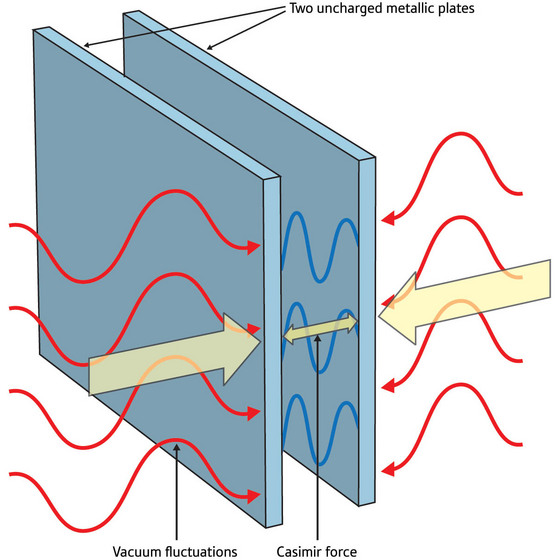
With so much theoretical content "at odds" with the everyday world, it becomes easy to question the veracity of phenomena involving the quantum realm. However, science is formed by rigid and empirical bases. In 1948 Casimir conducted an experiment that proved once and for all the existence of quantum vacuum fluctuations and the existence of virtual particles. This experiment consists of two metal plates, separated by only a few nanometers, inserted in a vacuum. In the small space between the plates, there is a limitation on the wavelengths that virtual photons can assume, whereas in the outer space, where there are no restrictions, the photons can assume a larger range of wavelength. Thus, it is expected that there is a higher incidence of photons on the outer walls than on the inner walls, which generates a force on the plates, promoting an approximation / displacement between them. The experiment carried out agreed with the theoretical predictions, in order to effectively confirm the veracity of the virtual particles.
Reference material: Quantum Mechanics for Scientists and Engineers (David AB Miller), a brief history of time (Stephen Hawking), universe in a nutshell (Stephen Hawking), the quantum universe (Brian Cox and Jeff Forshaw), modern quantum mechanics (JJ Sakurai and Jim Napolitano), 50 Quantum Physics Ideas (Joanne Baker).
Professor David A. B. Miller from Stanford University has a complete and free course on quantum mechanics in which he describes in detail the main topics in such a field of study.
Link to the course: https://lagunita.stanford.edu/courses/course-v1:Engineering+EEX0001A+Y01/about?fbclid=IwAR3j_k_vvWXqBQJHucB-8ttnyB65GXgJ_PPRccUk6oWsk9mMWx5rbl0xinA (first part)
and
Photo 1: Casimir Effect
Photo 2: Equations mentioned in the text
Photo 3: Creation and destruction operators
Photo 4: Paul Dirac







Comments