


Galaxies (full version)
- Pedro

- Feb 22, 2019
- 3 min read
Galaxies
Galaxies are huge systems composed by stars, gases, planets, satellites(…) held together by gravity where everything contained in those galaxies are orbiting the center of mass (if there is one). Our galaxy is called Milky Way because it looks like a milky patch of sky above the Earth at night. It has a radium of 52.850,0417 light-years (don’t get it wrong, light-year is a unit in respect to the travelled distance by light in a year), which means, light, the fastest particle in the universe takes approximately 105.700,0834 years to travel our galaxy from edge to edge.
Galaxies are classified accordingly with their shape; in general there are four:
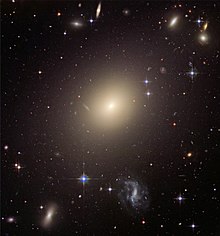
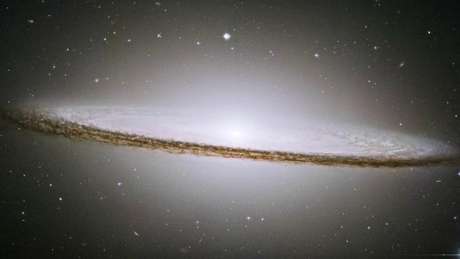
spiral, elliptical, irregular and lenticular. The spirals are called so because of the evident spiral plane structure around its nucleus and have clouds of matter scattered around its arms. The elliptical galaxies in counterpart have an approximately ellipsoidal form with stars with random orbits; they lack gas and dust (in general). Lenticulars have a flat shape, do not have spiral arms and have most of the dust contained in the disk that surrounds the boundaries of the galaxy. Irregular galaxies, as the name implies, have no definite shape.
The Milky Way is a large four main armed spiral galaxy. Its closest neighbors are two irregular dwarf galaxies, at a distance of 600,000 light years from our galaxy. The largest and closest galaxy to our galaxy is the Andromeda galaxy, which is even on a collision course with the Milky Way, and so will provide a spectacle in the sky in about four billion years to come.
Several studies indicate that in the center (nucleus) of several galaxies there are supermassive black holes, in the case of the Milky Way Saggitarius A * is indicated with 4.1 million solar masses. In several galaxies we find bodies known as quasars, powerful emitters of electromagnetic radiation that alone can shine more than entire galaxies.
As mentioned, galaxies are composed of stars, dust, gas, planets, asteroids, satellites and so on; however, the mass represented by all the ordinary matter that we know presents a minimum percentage (less than 5%) of the total composition of the Universe. In other words, galaxies do not have enough matter to maintain a gravitational equilibrium for them. So where does the rest of the dough come from? They see in an undetectable form of matter known as dark matter, which makes up about 24% of the entire composition of the Universe (the rest comes from dark energy). Dark matter does not interact with other particles, and therefore is undetectable; it is difficult to prove its existence rigorously, since we cannot observe it directly, but its reality is the solution to the insufficiency of matter in the cosmos.
Nothing in the Universe stands still; we are on Earth, which rotates on its own axis at a speed of 460 m/s , which in turn performs the translation movement around the Sun in a period of one year, the solar system orbits the center of the Milky Way, which in turn moves through space with a certain speed, as do all other galaxies. The Universe is not static, it is expanding. Astronomer Edwin Hubble in the 1920s grounded the Big Bang theory by examining the spectrum of galaxies (noticing a redshift) thus demonstrating that virtually all galaxies are moving away from us at a velocity V that is proportional its distance R from the Earth, so that V = R × H where H is the so-called Hubble constant and determines the rate of expansion.
There is still no definite conclusion as to how galaxies have formed, but in short the view is accepted that in the primordial Universe, more than 13 billion years ago (remembering that the Universe is approximately 13.8 billion years old) the galaxies originated from the collapse of hydrogen and helium (where the concentrations / density of these were larger), which formed the first stellar clusters.
We live on a planet which orbits a star, the main component of a certain planetary system called the solar system, which is present in the Milky Way which in turn has an average of 250 billion stars, which is one in the middle of approximately 100 billion galaxies which make up the observable universe. Life is an extremely rare phenomenon, as shown by Drake's equation, but with such cosmic perspective in mind the question becomes imperative:
Are we alone?








Comments